You Can Weather the Storm?
By Mary Hunt for The EpochTimes.
Perhaps the fact that I have never lived in a hurricane state gives me a pass for thinking hurricane season had arrived early when more than 2 feet of rain soaked Fort Lauderdale, Florida, recently. Truth be told, hurricane season officially begins June 1 and runs through Nov. 1. Being prepared to "weather the storm" is applicable to all of us regardless of where we live. Natural disasters can hit without warning. A few basic measures taken beforehand, otherwise known as emergency preparedness, could mean the difference between tolerable and misery even if you are on a tight budget.
Water
Experts recommend every household have at minimum a three-day supply of water for all who live therein. An easy way to determine the amount you need to keep on hand is 1 gallon of water per person, per day.
Food
Three-days' supply sounds easy, but what does that look like? First, it needs to be a supply of nonperishable food that doesn't need refrigeration or cooking. Canned foods like baked beans, pasta, and stews are great options, as they can be eaten cold if necessary, though the taste may not be as good. It's important to store at least one manual can opener with your food supply and keep an eye on expiration dates. Other affordable food options that don't require refrigeration include crackers; sandwich fillings like peanut butter, honey, and single-serving jams; canned fruit or fruit cups; pudding cups; trail mix, dried fruit, granola, or energy bars; summer sausage, and meat jerky.
Cooking Fuel
It's possible you'll be able to use your barbecue grill, wood or gas-powered camp stove to cook or heat up food outdoors. Never use these items inside a building like a house or garage. Even with all the windows open, dangerous fumes can build up and cause suffocation or other harmful effects. If it isn't possible to cook outside, another option is to use propane or ethanol gel cans also known as Sterno, or canned heat. While they don't generate enough heat to cook or boil water, they can still warm up canned food items.
First Aid, Medicine
Every household, regardless of the weather conditions, needs a well-stocked, complete first aid kit. However, preparing for a storm requires additional supplies of at least three days' worth of medication and medical equipment on hand in case of evacuation, items such as syringes, prescription drugs, hearing-aid batteries, contact lens solution, and any other necessary medical supplies.
Flashlights, Batteries
It's advisable to have at least one flashlight or lantern for every person in the house. Opting for LED lights with lithium-ion batteries is often more cost-effective in the short and long run, while those powered by more costly alkaline batteries tend to be brighter and more potent. Make certain that you have extra batteries for the lights and other battery-operated emergency devices, such as fans.
Keep in mind that alkaline batteries (AA, AAA, C, D, and 9-volt) are highly susceptible to corrosion. That means you should never store emergency devices that aren't in use with alkaline batteries inside.
Weather Radio
My Patriot Supply sells a specialized hand-crank, solar weather radio plus flashlight, and smartphone charger for about $40 at its online store. Of course, there are other stores both walk-in and online where you can find this item, so take the time now to search if you don't already own a quality weather radio. Any emergency radio device should pick up weather radio frequencies from the National Oceanic and Atmospheric Administration in addition to the more common AM and FM stations.
Cash
When the electricity goes out in a big area, the machines that give us money and let us pay with cards don't work. So it's important to have some cash on hand, preferably in small bills. This will help you buy things you need until the power comes back. Saving one-dollar and five-dollar bills is also a good way to save up money for later, even if there's no emergency.
Resources
Need a nudge to get started? You will find my simple list of emergency preparedness resources at EverydayCheapskate.com/emergencyprep.
Should You Fix It or Nix It?
By Mary Hunt - Everyday Cheapskate; In The Epoch Times, February 7, 2023
You're worried that the washing machine is on its last spin cycle. It makes a horrible screeching sound and needs a lot of coaxing to make it all the way through a full cycle. It's not like it's still under warranty. You've had it for four years, and it wasn't new when you got it. You got an estimate for repair and discovered it will cost $319 to get it back into tip-top shape. Should you give this old, inefficient machine the heave-ho in favor of a new model that will use less electricity and water?
A new name-brand front-loader is on sale for $999 plus tax and delivery. Should you basically throw away $319 now for a temporary fix or bite the bullet and buy the new one?
Here are some basic guidelines and suggestions to help you decide, based on costs for replacement and repairs, and the advantages of new models.
If You Can't Pay Cash for the New Replacement
You should get it repaired to buy yourself time to save up for the replacement. Even if the repairs will only keep this appliance going for a year or two, you're far better off repairing and then saving for a new machine than financing a new one and paying double-digit interest for the next three to five years.
If the Appliance Is 8 Years Old or Older
Once an appliance becomes elderly, usually it makes sense to replace it with a newer model.
If Repairs Are Really Expensive
If the repair bill is more than half the price of a new product, you are probably better advised to buy a new one. But again, the deciding factor will be whether you will have to go into debt to buy new.
If the Appliance Is Under Warranty
Even if repairs will be only partially covered by a warranty or service contract, repairing is the way you should go. If it's under warranty, call a factory-authorized repair shop. If not, an independent contractor is likely to offer better service at a lower cost. The costs for diagnosing problems and making repairs on home appliances have gone up considerably in recent years, which has made replacing with a new model more common.
A word to the wise: Home appliances have built-in obsolescence. By design, life expectancy has gone down slowly over the years. Refrigerators used to last for 30 years or longer by design. These days you'll be lucky to get 10 years, and that's with excellent maintenance and timely repairs.
Anticipate so you are not caught off guard. Setting aside a small amount of money every month to anticipate the cost of repairs and eventual replacement of major home appliances will give you cash options to make wise decisions.
How Vampire Electricity is Haunting Your Electric Bill
Energy Vampires: How Phantom Load is Draining Your Energy Bill
There is a sinister force that lingers in the shadows, draining energy when you least expect it and raising your energy bills. It's a phenomenon known as phantom load, also referred to as vampire electricity or stand by power, and many of our most commonly used electronic devices and gadgets are the biggest culprits. But what is phantom load, and how can we slay these energy vampires and keep our bills from becoming monstrous?
What is phantom load?
A phantom load occurs when a device continues to draw power even when switched off or in standby mode. That means you're paying for electricity when you aren't even using that device or appliance. How much are you paying? Well, according to Cornell University, these energy vampires can add as much as $200 per year in household energy costs.
What causes phantom load?
Technically, anything powered by electricity has the potential to draw 'vampire power'. Phantom load is caused by a number of devices that you may be forgetting about, and it could be anything with a standby or sleep mode. These include devices we use daily, and some examples include:
+ Computers: That laptop, asleep and folded shut, may seem like it's completely inert. But if you have it plugged into the wall, it is draining energy even when not active. Even if the computer is totally shut down, it can still be drawing 'vampire power' to run in the background.
+ Televisions and entertainment devices: Entertainment devices like TVs, cable boxes, stereos, these are almost always energy vampires. As a rule - if it has a remote, it is probably draining electricity from your wall without you even knowing.
+ Appliances like coffeemakers and toasters: whether it has a timer and standby settings or not, most small appliances like toaster ovens, microwaves, and coffeemakers are using energy even when you don't have them turned on.
+ Unconnected laptop or cellphone chargers: if you unplug your device from a charger, it's not drawing power, right? Wrong. If a charger is plugged into the wall, it will minimally drain some power, whether a device is attached to it or not.
A great way to tell if you are the victim of an energy vampire is if a device is ready to 'wake up' and be used at a moment's notice without powering on. If you're curious about how to find phantom load or whether a particular appliance is drawing standby power, you can use a watt meter to find out. By plugging a watt meter into the wall and then your device, you can see if it is drawing power even when switched off. If it's not, congratulations! You're on your way to uncovering and neutralizing the source of vampire electricity drain.
How do I stop phantom load?
You don't have to sit back and take being a vampire energy victim; you can fight back! You can avoid standby power and put your hard-earned dollars back into your wallet. But how?
* Unplug: The most effective way to slay energy vampires is to unplug your devices when not in use, ensuring you are only using energy when you need it.
* Check your settings: Many devices come with energy-saving settings built to help reduce the amount of power they draw when not in use. Enact these energy-save modes whenever possible.
* Use a smart power strip: If unplugging each device seems like a lot, or you are likely to forget, fear not! Another viable option for keeping phantom load in check is to use smart power strips. These helpful little tools can stop electricity from reaching your little energy vampires without needing to constantly plug and unplug. The best news? They are relatively inexpensive, and the energy they save can add up to thousands in the long run if used properly. Not sure which smart power strip to get? Not to worry, you can order from our online store!
(Webmaster - I just use a regular power strip. My computer, monitors, sound system, and printer are on 1 strip. Turn it on and everything fires up except the computer which I just hit 'enter' to start. When I am done for the day, put the puter to sleep and turn the strip off. DONE!)
Taking a few easy steps now to help keep phantom load in check can keep the appliances you love from draining energy from your walls and money from your wallet. If you're interested in ways to neutralize vampire power, or to learn more about how to become more energy efficient in general, discover all the resources Consumers Energy can offer at ConsumersEnergy.com/charlesathome.
Home Maintenance Tasks Experts Say Many Miss
Daniel Bortz for Washington Post / The Grand Rapids Press Sunday, 1 March 2020
If you pride yourself on keeping your home in tiptop shape, you're the kind of homeowner who takes the necessary steps to keep your house running like a well-oiled machine; or at least you think you're taking all of the right steps. The hard truth, though, is many people overlook a number of important home maintenance tasks. "There is so much many homeowners just don't know to do," says Melissa Mitchell, director of operations at GrayWolf Residential Services, a preventive home maintenance company based in Beachwood, Ohio. Experts say homeowners often miss these 10 home maintenance tasks, which can have serious consequences, including expensive repairs.
CLEAN YOUR REFRIGERATOR'S CONDENSER COILS:
Most condenser coils are located across the bottom or at the back of the unit. These cool and condense the refrigerant and can collect dust and hair and get clogged, forcing your refrigerator to work harder to stay cold. "The result is decreased efficiency and poor cooling performance," says Wayne Archer, technical expert at Sears Home Services.
Hunter Macfarlane, Lowe's project expert, recommends homeowners clean their refrigerator's condenser coil once a year. You can do this yourself by unplugging the refrigerator, removing the grill protecting the coils and gently using the hose from a vacuum cleaner to suck out dust particles and debris.
CLEAN YOUR REFRIGERATOR'S ICE CUBE MAKER:
"We all go through such great lengths to ensure our drinking water is filtered and clean, but without properly cleaning and replacing filters, we can be creating other issues from mineral buildup, dust and other debris," says Rob Morelli, co-founder and chief executive at HomeKeepr, a referral network for home service professionals. This can eventually lead to mold and can contaminate the ice; hence, it's important to replace your refrigerator's water filter as needed. (Check your manufacturer's instructions.) In addition, you'll want to clean your ice maker's collection bin annually, or two to three times a year if you have "hard" water, meaning it's high in dissolved minerals, specifically calcium, iron and magnesium, and causes limescale buildup. (You can buy a water test kit online for about $15 to $30 to test your water's hardness yourself.) An equal mixture of white vinegar and warm water will do the trick, Morelli says.
CLEAN YOUR BATHROOM'S EXHAUST FANS TWICE A YEAR:
Bathroom exhaust fans help eliminate odors and remove moisture that would otherwise land on surfaces and turn into mold; however, a fan can't operate properly if its cover is dirty, warns Mark Clement, co-founder at MyFixitUpLife.com, a resource for DIY home remodeling. The solution is simple: Give bathroom vent covers a thorough cleaning with soapy water twice a year to keep your exhaust fans running efficiently.
CLEAN THE DRYER VENT, NOT JUST THE LINT SCREEN:
Most homeowners know it's important to clean their dryer's lint screen in between loads to prevent fires, but many people don't check for lint buildup in and around the dryer duct and vent filter, says Dan DiClerico, home expert at HomeAdvisor. In fact, failure to clean the dryer is the leading cause of clothes dryer fires, according to the U.S. Fire Administration. Dryer vents should be cleaned at least once a year, DiClerico says. "For best results, invest in a dryer vent cleaning kit, which makes it easy to access the vent filter through the dryer's ductwork," he suggests.
FLUSH THE WATER HEATER FOR BETTER PERFORMANCE:
Your home's water system will perform better and last longer if you flush the tank once a year to remove sediment, says DiClerico, because magnesium and calcium build up over time, which can reduce a water heater's efficiency. "This goes for both gas and electric systems," he says. According to HomeAdvisor, plumbers will include flushing in their annual tuneup for about $200.
SWEEP THE CHIMNEY TO AVOID FIRES, CARBON MONOXIDE LEAKS:
Love using your wood-burning fireplace? Smoke can leave behind ash and carbon deposits called creosote, "residue that needs to be removed periodically because it can lead to chimney fires and carbon monoxide leaks," DiClerico says. The National Fire Protection Association recommends a chimney inspection at least once a year.
CLEAN THE DISHWASHER A FEW TIMES A YEAR:
This may sound counterintuitive; after all, you use your dishwasher to clean dishes; but your machine won't last as long, or perform as well, if you don't clean it a few times a year. "A good trick for deodorizing the dishwasher is to place a bowl full of vinegar in the middle of the bottom rack and then run a normal wash cycle," DiClerico says. The vinegar trick is mainly for deodorizing, but it will also remove some of the stains and discolorations that can build up over time in a dishwasher's interior. For more stubborn stains, which are common in homes with hard water, homeowners can try a store-brought dishwasher cleaner; DiClerico recommends Lemi Shine Original.
REMOVE CALCIUM DEPOSITS FROM SHOWER HEADS:
"Natural minerals in our water build up over time and clog the holes in a shower head, which can create a breeding ground for potentially harmful bacteria and mildews if left untreated," says Bailey Carson, head of cleaning at Handy, a website and mobile app that connects consumers with home service providers.
To remove calcium deposits and other gunk, fill a small bag with one cup equal parts water and distilled white vinegar and attach it to the shower head's nozzle with a twist tie, letting it soak for 20 minutes, says Carson. "For a more thorough clean, remove the shower head to let it fully soak and then use an old toothbrush to clean away any remaining debris." Make sure to flush the shower head with hot water once you're done cleaning before using it. A full soak should be done about once every three months, says Carson; however, if you notice reduced or uneven shower pressure, it's time for a cleaning.
KEEP YOUR WASHING MACHINE MILDEW-FREE:
Don't want mold to fester and grow in your clothes washer? Run a cup of white vinegar through the washing machine, using a cleaning cycle (available on some washers) or a normal cycle with hot water, once per month, says Mitchell of GrayWolf Residential Services. Also, keep your washing machine's lid or door open in between cycles to allow the basket to dry out. Front-loaders are more likely to build up mold, but it can happen to top-loaders, too.
INSPECT TREES AND TREE LIMBS NEAR YOUR HOME FOR SAFETY:
That beautiful sycamore tree near your bedroom window may be a cause for concern. Depending on its proximity to your home and the tree's condition, strong winds could force it to come crashing into your house. As a result, Angie Hicks, co-founder of Angie's List, says it's a good idea to add tree inspections to your annual home maintenance checklist. "Checking specifically on trees near your home, driveway, garage and any power lines is especially important," she says.
If you have trees close to your home, you'll want to hire a professional arborist to do an annual sweep of your property. Doing this means you'll have an expert who can identify early signs of disease or rotting. Expect to pay $75 to $100 for an inspection of one to five trees, and each additional tree will cost about $25, according to HomeAdvisor.
Then, follow the arborist's advice on what foliage to trim or cut down. "With trees, it's better to be proactive than reactive, as a fallen tree can cause a lot of damage and cost a lot of money," Hicks says.
 Tub
Tub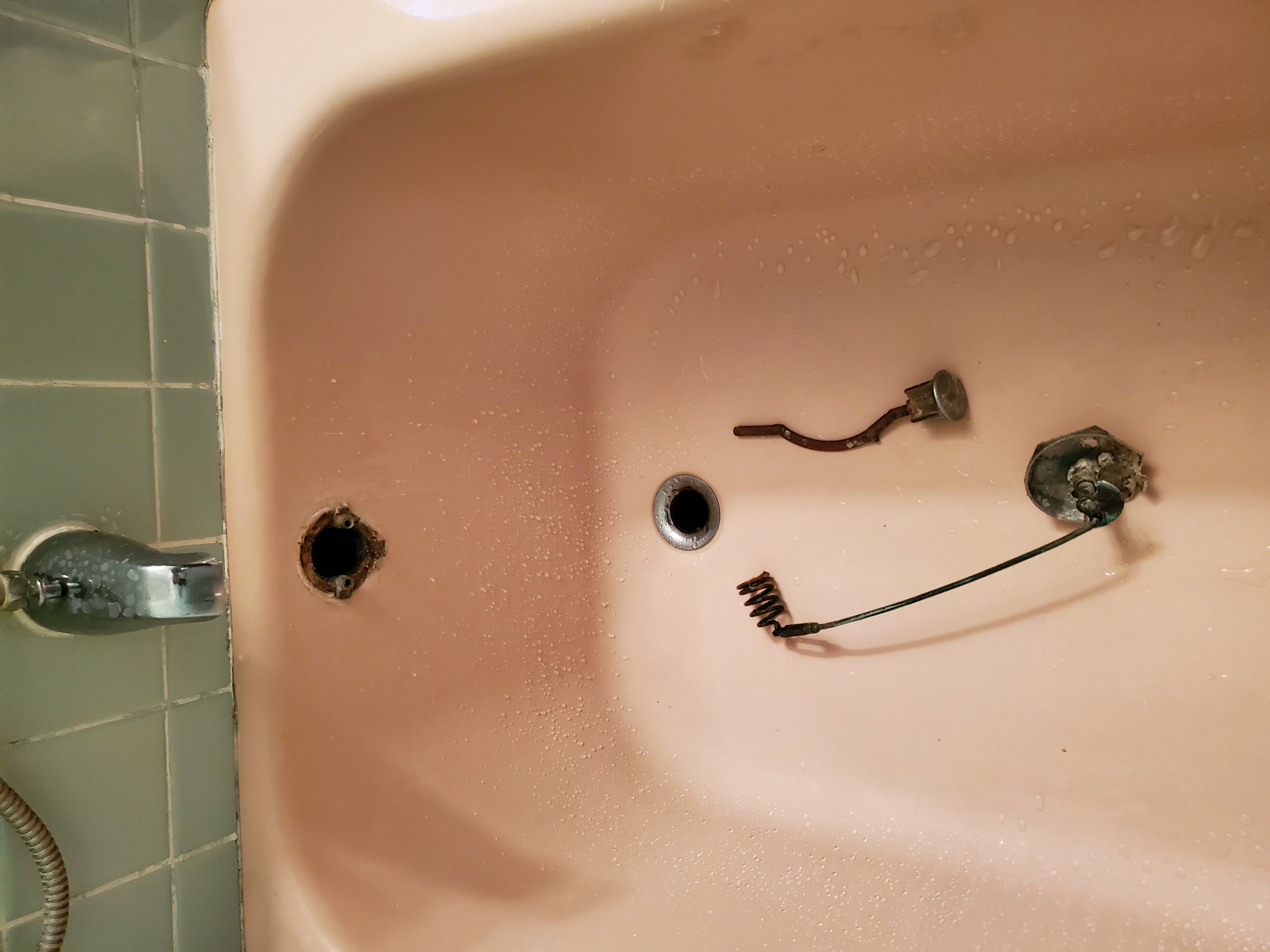 Parts removed
 The clog off the coil